Roaring Revival: The Ultimate Guide to Styling Every Room with Art Deco Elegance
There is a reason we keep coming back to the 1920s. It was an era that refused to be boring. After the austerity of the First World War, the world exploded into a celebration of life, technology, and luxury. This birth of “Art Deco” wasn’t just a trend; it was a movement that combined the ancient (think Egyptian motifs discovered in King Tut’s tomb) with the futuristic (skyscrapers, aviation, and machinery). Today, bringing Art Deco into your American home doesn’t mean turning your living space into a movie set. It means reclaiming a sense of occasion. It means understanding that your home should be a place of beauty, confidence, and perhaps a little bit of drama. Whether you are renovating a historic property or looking to add character to a new build, the principles of Deco—symmetry, geometry, and luxury materials—are timeless tools for better living. Below, we have curated ten specific design moments for different rooms in your house, complete with the inspiration you need to visualize them.
1. The Grand Entrance: The Sunburst & Console
The entryway is the handshake of your home; it introduces you before you even speak. In the Art Deco era, entryways were designed to impress immediately, utilizing high-contrast materials and reflective surfaces to amplify light and space. To recreate this, you need to move away from the farmhouse “drop zone” aesthetic and toward something much more curated. The anchor of this look is the console table. We aren’t looking for rustic wood here; we want high-gloss lacquer (black is classic, but navy or oxblood are stunning) or burl wood veneers that show off complex grain patterns. The silhouette should be streamlined—perhaps with waterfall edges or sleek brass legs.
But the true star of a Deco entryway is the mirror. The “sunburst” motif is perhaps the most recognizable icon of the era, representing the dawn of a new modern age. Placing a large, gold or brass-framed sunburst mirror above your console does two things: it acts as a piece of sculpture that draws the eye, and it bounces light around what is usually a dark hallway. Accessorize this setup sparingly but boldly. A pair of tall, slender lamps with stepped glass bases, a simple tray for keys, and perhaps a geometric rug runner are all you need. This space sets the tone: you are leaving the chaotic world behind and entering a space of order and elegance.
2. The Living Room Centerpiece: The Curved Velvet SofaIf you look at furniture design before the 1920s, specifically the Victorian era, you see a lot of rigid, upright, and overly tufted pieces. Art Deco rebelled against this by introducing the “streamline.” Inspired by the aerodynamics of trains and ocean liners, furniture began to take on curves. The curved sofa—often referred to as a “kidney bean” shape or a serpentine sofa—is the absolute pinnacle of this living room aesthetic. It softens the hard angles of a standard rectangular room and encourages conversation because the seating is naturally angled inward.
Material selection here is non-negotiable: it has to be velvet. Velvet absorbs light in a way that gives color a incredible depth and richness. While neutrals are safe, Art Deco is about boldness. Think deep emerald greens, sapphire blues, mustard yellows, or a dusty rose pink. These “jewel tones” were massive in the 20s and 30s because they conveyed wealth and luxury. When styling this sofa, let it breathe. Pull it away from the wall to show off its sculptural back. Pair it with round nesting coffee tables made of glass and brass to echo the curves of the seating. This isn’t just a place to sit and watch TV; it’s a lounge meant for cocktails and conversation.
3. The Hearth: Geometric Fireplace SurroundsIn many American homes, the fireplace is the architectural focal point of the living room. However, standard brick or simple wood mantels often lack the punch required for a Deco-inspired space. The architecture of the 1920s was obsessed with verticality and “stepping.” Think of the shape of the Empire State Building or the Chrysler Building—how they get narrower as they go up in stepped increments. This is called the “ziggurat” shape, and it is a perfect motif to apply to a fireplace surround.
To achieve this look, you don’t necessarily need to rebuild your chimney. You can achieve it through tiling or a new mantel facade. Use tiles in contrasting colors (black marble with gold inlay is the dream) to create geometric patterns like chevrons or fans directly on the surround. If renovation isn’t in the budget, focus on the accessories. A fireplace screen is a huge opportunity for style. Look for a brass screen featuring a “fan” design—a repeating pattern of arches that looks like an open folding fan. Place a pair of tall, metallic andirons inside. Even if you never light a fire, the hearth should look like an altar to modern design: clean, geometric, and gleaming with metallic accents.
4. The Culinary Space: High-Gloss & High-Contrast KitchensThe kitchen of the 1920s and 30s was a place of scientific efficiency. It was the era when electricity became standard in homes, and hygiene was a major obsession. This resulted in kitchens that looked almost like laboratories, but stylish ones. To interpret this for a modern home, we look to the classic Deco palette: Black and White. There is nothing sharper than a tuxedo-style kitchen. This usually means black lower cabinets paired with white uppers, or a full wall of black cabinetry surrounding a white marble island.
The finish is crucial here. While matte finishes are popular in farmhouse styles, Art Deco loves a high-gloss finish. Lacquered cabinets reflect light and feel incredibly premium. For the hardware, skip the invisible pulls. You want jewelry for your cabinets. Long, vertical bar handles in polished chrome or unlacquered brass add that vertical line work that defines the style. For the backsplash, subway tile is fine, but laying it in a herringbone pattern or using a tile with a metallic geometric inlay takes it to the next level. Finally, globe pendant lights—simple white glass orbs on brass rods—are the period-correct way to light your island.
5. Dining Ambience: The Tiered ChandelierIn an Art Deco home, the dining room is theater. It is a space designed specifically for entertaining, and the lighting is your special effect. During the Jazz Age, lighting designers began to hide light bulbs behind layers of glass to diffuse the glare and create a soft, flattering glow. This led to the creation of the tiered chandelier, often made of glass rods, frosted panels, or tiers of fringing. This fixture shouldn’t just light the table; it should dominate the room.
When choosing a fixture, look for “wedding cake” shapes—layers that get smaller as they descend—or linear fixtures made of hanging glass rods that look like icicles. The metal finish should match the warmth of the room; brass creates a golden, candlelight glow, while chrome feels cooler and more industrial. Because the light fixture is so ornate, keep the table underneath it relatively simple. A sleek, polished wood table (mahogany or walnut) allows the reflection of the chandelier to be seen on the table surface. This interplay of light and dark wood creates an intimate, moody atmosphere perfect for long dinner parties.
6. The Master Suite: The Fluted HeadboardYour bedroom should feel like a suite at the Waldorf Astoria in 1930. The quickest way to achieve this boutique hotel vibe is through the headboard. In the Art Deco period, texture was just as important as pattern. “Fluting” or “channel tufting” refers to vertical rolls of fabric that create a ribbed effect. This verticality draws the eye upward, making ceilings feel higher and the bed feel more regal. It is a specific upholstery style that immediately signals “luxury.”
Size matters here. An Art Deco headboard shouldn’t just sit behind the pillows; it should command the wall. Look for extra-wide headboards that extend behind the nightstands, or extra-tall ones that reach toward the ceiling. Fabric choice is key—velvet is the standard because of how it catches the light on the curves of the fluting, creating natural highlights and shadows. In terms of color, you can go moody with midnight blue or charcoal, or soft and feminine with champagne, silver, or dusty pink. Pair this with crisp white bedding to keep the look modern and not overly heavy.
7. The Vanity Corner: Mirrors and RitualsThe concept of the “boudoir” or dressing room was central to the Art Deco lifestyle. It celebrated the ritual of getting ready. Even if you don’t have a whole room to spare, carving out a corner of your bedroom or bathroom for a dedicated vanity table can add immense glamour. The defining characteristic of Art Deco furniture in this category is the use of mirrored surfaces. Furniture covered in mirror panels became popular in the 30s as a way to make heavy furniture disappear and to reflect light in dim rooms.
Look for a vanity desk that features curved drawers or a “kidney” shape. If a full mirrored desk is too much for you, look for a wood desk with a high-gloss finish and chrome accents. The mirror on the wall should be frameless or have a simple beveled edge, perhaps in a circle or an arch shape. Seating is also important; a small, round ottoman or stool upholstered in faux fur or boucle adds a texture contrast to the sleek, hard surfaces of the mirror and glass. This little corner becomes a shrine to self-care, encouraging you to slow down and enjoy the process of preparing for the day.
8. The Bath Foundation: Black & White Geometric TileBathrooms in the Art Deco era were a rebellion against the floral, cluttered Victorian bathroom. They were clean, stark, and geometric. The floor is the canvas where this style is most easily recognized. You cannot go wrong with black and white. It is the color combination that defined the era’s approach to tiling. However, we aren’t talking about simple squares. We are looking for dynamic patterns: basketweave, hexagon mosaics with floral inlays, or the classic chevron (zigzag).
To modernize this, you might use large-format marble tiles for the walls but keep the intricate mosaic patterns for the floor. The contrast is what makes it “Deco.” If you have a walk-in shower, carry the floor tile seamlessly into the shower pan. To warm up the coldness of the black and white stone, use brass fixtures. The combination of black, white, and gold is the holy trinity of Art Deco color palettes. It feels expensive, timeless, and incredibly clean. A pedestal sink with chrome or brass legs instead of a heavy cabinet can also help open up the space and keep the focus on that stunning floor pattern.
9. Bathroom Details: Sconces and HardwareWhile the tile sets the stage, the jewelry of the bathroom lies in the lighting and the mirror. Builder-grade bathroom lighting is usually an afterthought, but in Art Deco design, wall sconces are sculptural elements. You want to look for “sidelights”—fixtures that are mounted on the wall on either side of the mirror, rather than a bar above it. This is actually better for applying makeup as it reduces shadows, but it also creates a sense of symmetry that is crucial to the Deco look.
Look for sconces that feature frosted glass in the shape of tubes or fans. The metal should be polished—chrome or nickel for a cooler, more sterile 1930s look, or brass for a warmer, luxe feel. Pair these with a mirror that has a unique shape. Instead of a standard rectangle, look for a mirror with “cut corners” (an octagon shape) or an arched top. Some Art Deco mirrors even feature etching on the glass or colored glass borders. These small changes—swapping a light and a mirror—can completely change the era of your bathroom without ripping out a single tile.
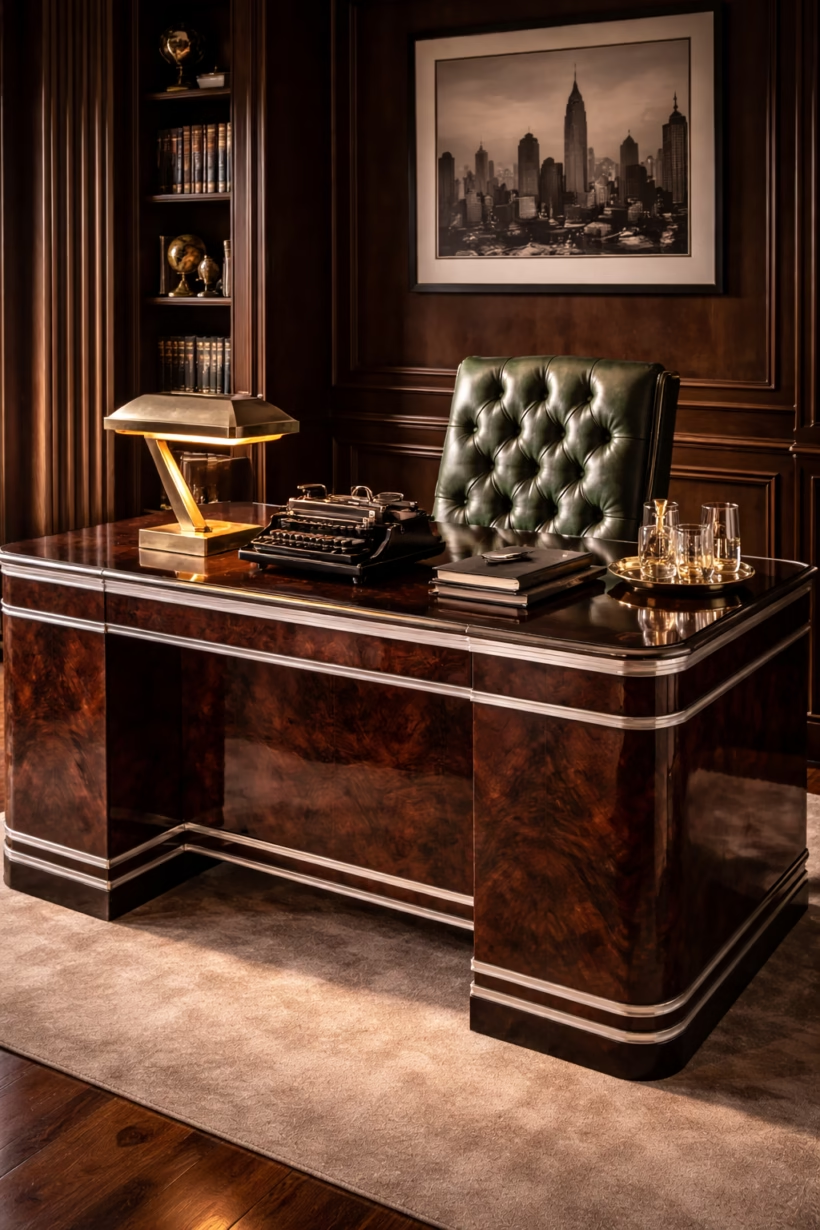
10. The Executive Study: The Power DeskThe 1920s saw the rise of the skyscraper and the powerful executive. The office design of this era was masculine, imposing, and sleek. Whether you are working from a dedicated home office or a corner of the living room, an Art Deco desk makes a statement. We are moving away from the “light and airy” trestle desks and moving toward heavy, grounded furniture. The materials should be rich and dark: Macassar ebony, walnut, or rosewood were the woods of choice, often polished to a high sheen.
But wood wasn’t enough; it was often paired with metal. A desk with chrome banding or stainless steel legs brings in that “machine age” aesthetic. The shape should be substantial, perhaps with a curved front or asymmetrical drawers. To style this, you need a “Banker’s Lamp”—but make it Deco. Look for a desk lamp with a stepped glass shade or a brass mushroom shape. The chair should be leather, structured, and comfortable. This is a workspace designed for serious business, evoking the energy of a Manhattan tycoon overlooking the city.
Embracing Art Deco doesn’t mean you are living in a museum; it means you are choosing to live with intention. By bringing in these ten elements—from the fluted headboards of the bedroom to the geometric floors of the bath—you infuse your daily life with a sense of history and glamour.