
15 Small Bedroom Storage Solutions That Actually Work (No More Clutter, Promise)
If your bedroom feels less like a sanctuary and more like a storage unit you happen to sleep in, you’re not alone. Small bedrooms are one of the most common complaints I hear from readers — and honestly, from people in my own life. You move in, you have all the best intentions, and then slowly the floor disappears under clothes, the nightstand becomes a graveyard for books you meant to read, and the closet door no longer closes all the way.
Here’s the thing nobody tells you upfront: the problem usually isn’t that you have too much stuff. It’s that your room isn’t designed to handle what you actually need from it. The right storage solutions can transform even the tightest space into something that feels organized, calm, and genuinely livable.
I’ve been writing about home organization for years, and I’ve pulled together the most practical, beautiful, and surprisingly achievable ideas I keep coming back to. Whether you rent or own, have a big budget or almost none, there’s something here for you.
1. Float Your Shelves All the Way Up the WallMost people stop at eye level. That’s where the wasted potential begins.
Take a good look at Image 1 above. Those warm walnut floating shelves run in staggered lines across two full walls, all the way up toward the ceiling — and the effect is stunning. But more than the aesthetics, the function is what gets me every time I look at it. Every square inch of vertical wall space is doing work.
This approach is perfect for anyone who reads a lot, collects small objects, or just needs to get things off flat surfaces. If you’re in a studio apartment or a guest room where square footage is genuinely limited, going vertical is one of the smartest moves you can make.
The reason it works so well is psychological as much as practical. When storage goes upward, your eye follows — and the room actually feels taller. A handful of books and plants arranged thoughtfully on staggered shelves reads as decor, not clutter.
Practical tip: Install the lowest shelf just above bed height (so roughly 36–40 inches from the floor) and space subsequent shelves about 10–12 inches apart. Keep the items closest to eye level curated — books with neutral spines, small plants, one or two sentimental objects. Reserve higher shelves for less-used items.
In my experience, people hesitate to go this high because they worry the room will feel overwhelming. It doesn’t — especially if you keep a light, neutral palette. The warmth of natural wood against a white wall, like in the image, hits a sweet spot between cozy and airy.
2. A Murphy Bed with Built-In Storage Is a Game-ChangerYou don’t have to sacrifice your whole room to a bed.
Image 4 shows a beautifully executed Murphy bed setup — and notice that the bed itself takes up the center, while floor-to-ceiling built-in shelving flanks both sides, complete with warm LED lighting. When the bed folds away, that space becomes a functional living area. When you need to sleep, it’s a real, full-size bed.
This solution is particularly powerful in rooms that double as a home office, studio, or guest room. If you work from home and your bedroom is the only quiet space you have, a Murphy bed lets you mentally and physically separate sleeping from working.
What makes the version in Image 4 work so well is the integrated storage on the sides — not tacked on as an afterthought, but designed as part of the same system. Those lit shelves hold books, plants, decorative objects. The whole unit looks intentional.
Practical tip: If a custom built-in is out of budget, many furniture companies now sell Murphy bed kits with side shelving units that you can assemble yourself. IKEA’s PAX system can actually be hacked to work similarly. Focus on keeping the shelving beside the bed at the same depth so the whole wall reads as one cohesive unit.
I’ve noticed that people often resist Murphy beds because they assume they’ll feel impermanent or cheap. The market has come a long way — there are genuinely gorgeous options now that you’d never identify as fold-down beds at first glance.
3. Use the Space Under Your Bed (All of It)The area under your bed might be the most underutilized storage zone in your entire home.
Image 3 is one of my favorites in this collection because it’s so immediately practical. That storage bed has multiple deep drawers — some holding folded linens, others shoes, and there’s even a lower row that slides out independently. It’s essentially a dresser built into your bed frame.
This is the move for anyone who’s renting and can’t install built-ins, or for anyone who simply doesn’t want bulky furniture competing for floor space. A storage bed with drawers consolidates what might otherwise require a dresser, a shoe rack, and a linen closet into one piece of furniture.
The key is to think about categories before you buy. Do you need mostly flat, shallow storage for shoes? Deep storage for bulky bedding? Some beds have one large lift-up platform; others have segmented drawers. Each serves a different need.
Practical tip: Measure your bedroom before committing to any under-bed storage solution. Platform beds with drawers typically add 8–12 inches of height, which affects how the room feels proportionally. If your ceilings are low, this added height can make the room feel more cramped. In that case, opt for a low-profile bed with rolling under-bed storage containers instead.
If you’re working with a small space and can only afford to upgrade one piece of furniture, make it the bed frame. The storage payoff is substantial.
4. The Hidden Desk Inside a WardrobeFor those who need a workspace but refuse to let it colonize their bedroom.
Image 2 shows a fold-down desk built directly into a wardrobe cabinet. Close the door and you’d never know it’s there — just a clean, continuous cabinet wall. Open it and you have a full workstation with LED lighting, a floating desk surface, shelving for books or files, and an outlet. It’s one of the cleverest configurations I’ve seen in a small bedroom.
This works particularly well in city apartments where the bedroom often has to pull double duty. Having a desk that fully disappears at the end of the workday does something remarkable for your sleep hygiene — out of sight genuinely does mean out of mind.
Practical tip: If you’re building or commissioning something custom, ask for a cable management channel along the back wall so your laptop and monitor cables don’t become a tangle every time you open the cabinet. A small magnetic closure or push-to-open mechanism keeps the whole thing feeling seamless.
I’ve noticed that people who use bedroom workspaces often struggle to mentally “switch off” from work mode. Having the desk enclosed in a cabinet is one of the simplest and most effective ways to create that boundary.
5. Loft Beds Aren’t Just for KidsIf your ceilings are tall enough, sleeping up high opens a whole new room beneath you.
Images 6, 8, and 11 all show different takes on the loft bed concept — and the range is remarkable. Image 6 features a softly lit built-in loft with a full desk and bookshelf below, almost like a study nook. Image 8 is more industrial — a simple platform loft over a workspace with floor-to-ceiling blue shelving on one side and a hanging rail for clothes on the other. Image 11 goes minimal: a black metal loft frame above a clean desk setup with herringbone floors and glowing wall lighting.
What they all share is the core idea: elevate the sleeping area to reclaim the floor below for living, working, or storage. In a room where floor space is genuinely scarce — under 120 square feet, say — this can feel like doubling your room.
The crucial factor is ceiling height. You need at least 9 feet to make this comfortable. At 8 feet, you’ll likely feel cramped on the upper level. Anything lower than that and it becomes claustrophobic.
Practical tip: Use the space below the loft intentionally — don’t let it become a dumping ground. Designate it as a specific zone: a desk area, a reading nook, a wardrobe zone. The more purpose-built it feels, the better the whole room will function.
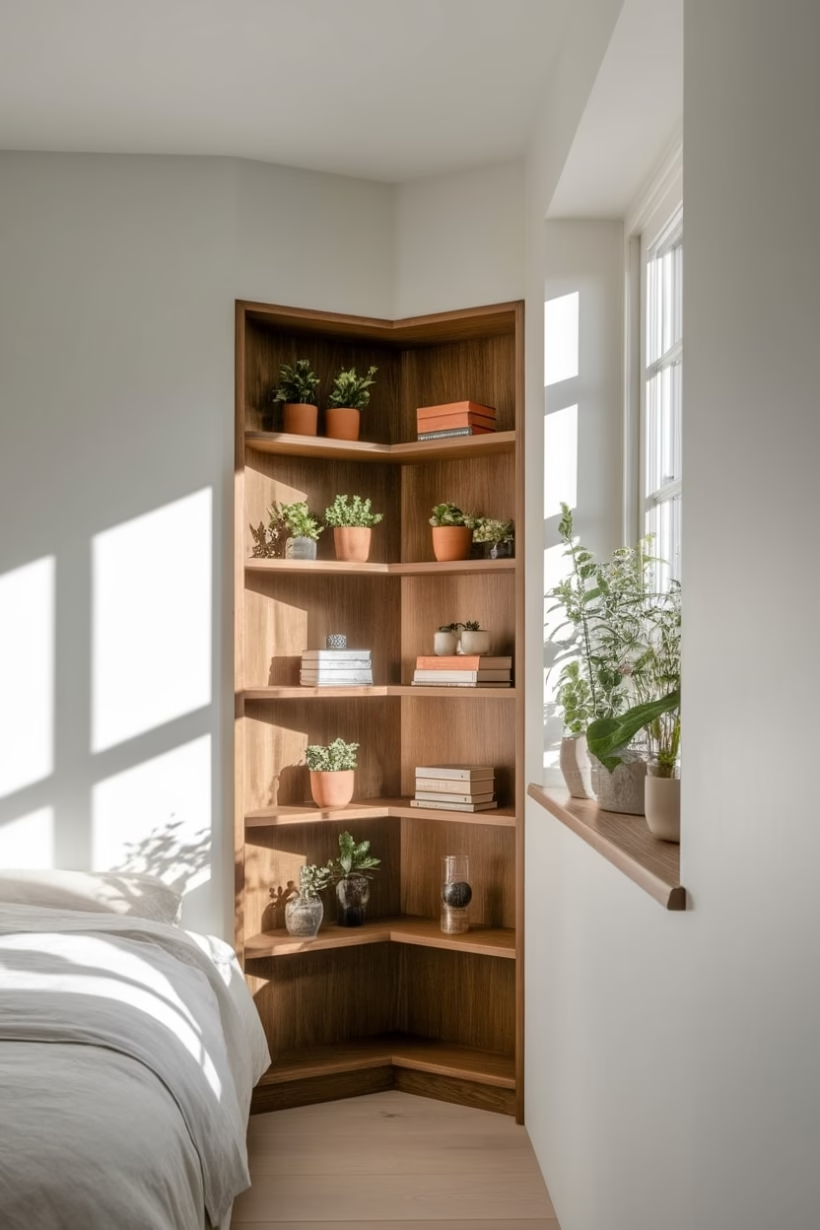
6. Corner Shelves: Dead Space Made UsefulCorners are where good storage intentions go to die — unless you design specifically for them.
Image 13 is a masterclass in corner shelving done right. A tall, floor-to-ceiling unit wraps neatly into the corner of the room, its shelves slightly angled to meet. Filled with terracotta pots, trailing plants, and stacked books, it transforms what’s usually wasted space into the most eye-catching feature in the room.
Corner shelves are ideal when you don’t have long uninterrupted wall runs to work with — maybe because of windows, doors, or existing furniture. They tuck in without eating into the room’s footprint the way a freestanding bookcase would.
Practical tip: Build or buy corner shelves that are slightly deeper than standard (12–14 inches rather than 8–10) so you can actually fit books vertically. Shallower corner shelves end up mostly decorative by necessity. Also, light the corner — even a simple clip-on lamp draws attention upward and makes the whole display feel intentional.
7. A Sliding Barn Door Changes How You Use SpaceSwing-out doors eat more floor space than you realize.
Image 12 shows a warm oak sliding barn door revealing a built-in sleeping nook — shelves above, curtained walls on the side, daylight from a tall window. It’s a completely cocooned sleeping space, and the barn door means no clearance zone needed for the door arc.
Sliding doors work in any bedroom, not just in nook configurations. If your closet has hinged doors that bump into the bed or dresser, replacing them with barn-style sliders instantly adds usable floor space and often looks better too.
Practical tip: Track hardware matters more than most people expect. Cheap track systems wobble and squeak over time. Spend a bit more on quality hardware — companies like Rustica or Calhome make durable, good-looking options that feel solid for years.
8. The Storage Ottoman at the Foot of the BedOne piece of furniture, three jobs: seating, storage, and styling.
Image 9 shows a tufted velvet storage ottoman sitting at the end of a bed. It looks like pure luxury. It’s actually doing serious organizational work — blankets, pillows, seasonal accessories can all live inside that bench while the exterior looks polished and intentional.
This is the perfect solution for people who have good storage elsewhere but still end up with a pile of throw blankets on the floor or random items accumulating at the foot of the bed. The ottoman catches all of it elegantly.
Practical tip: Choose an ottoman that’s roughly the same width as your bed frame for visual balance. Height matters too — you want to be able to sit on it comfortably, so look for pieces in the 17–19 inch seat height range. A lid with a soft-close hinge is worth the extra cost.
9. Wall Sconces Instead of Bedside TablesClearing your nightstand — or eliminating it entirely — is easier than it sounds.
Image 10 is all mood: two brass dome sconces mounted on either side of the bed, casting warm pools of light against a textured plaster wall. No tables needed. No surface to accumulate clutter.
Wall-mounted reading lights free up floor space (no lamp cords, no lamp footprint) and eliminate the gravitational clutter pull that bedside tables seem to generate. If you still need a surface, consider a very slim floating shelf — 6 inches deep is plenty for a phone, a glass of water, and a book.
Practical tip: Have an electrician add switched outlets behind the headboard wall if you’re hardwiring sconces. If hardwiring isn’t an option, plug-in sconces with a cord cover are nearly as clean and much easier to install.
10. Mirrors to Open Up the RoomStorage doesn’t always mean shelves. Sometimes it means using illusion strategically.
Image 5 captures two oval mirrors flanking a bedroom doorway, both reflecting the light-filled room beyond. Image 7 goes further — an entire corridor of floor-to-ceiling mirrored wardrobe doors, with LED strips at the base and crown, creating a tunnel of reflected space.
Mirrors are a classic small-space trick for a reason: they genuinely work. A large mirror opposite a window bounces natural light deeper into the room and creates the optical effect of a second window. Mirrored wardrobe doors serve double duty — storage behind, spatial expansion in front.
Practical tip: For the most dramatic effect, place a large mirror on the wall perpendicular to your main window rather than directly opposite it. The angle catches and scatters light more dynamically than a direct reflection.
11. Built-In Window Seat with Storage BelowEvery bedroom with a window is a bedroom with the potential for a beautiful reading nook.
Image 14 might be the most aspirational image in this whole collection — a deep walnut window seat flanked by built-in shelving, with cushions, throw pillows, drawers below, and sheer curtains filtering leafy outdoor light. It’s the kind of nook you want to spend a Sunday morning in.
The storage below the seat is the real prize. Deep drawers handle bulky items beautifully: spare duvets, seasonal clothes, sports gear. The flanking shelves hold books within arm’s reach.
Practical tip: If you’re building from scratch, make the seat depth at least 24 inches so you can actually curl up on it. Shallower than that and it becomes purely decorative seating that nobody actually uses. Hydraulic lift storage (where the seat lifts up) is an alternative to drawers if your space under the seat is very deep.
12. Floor-to-Ceiling Wardrobes on Facing WallsWhen you need maximum clothing storage and minimum visual noise.
Image 7 takes this to the extreme in the most satisfying way — white gloss wardrobes on both sides of a narrow bedroom, LED strips at floor and ceiling, everything reflecting everything else. It feels like walking into a high-end hotel suite. Every inch of storage is hidden behind seamless doors.
For a bedroom where you need serious wardrobe capacity — a couple sharing a small space, for instance, or a fashion person who simply owns a lot — this kind of wall-to-wall approach is far more functional than standalone furniture.
Practical tip: Use handleless push-to-open doors or recessed pulls to keep the front face of the wardrobes visually clean. Visible hardware breaks up the seamless look and makes the room feel busier. Match the door color to the walls for maximum spatial illusion.
13. Headboard Storage UnitsThe wall behind your bed is begging to be used.
Image 15 shows a narrow built-in shelf unit that runs up one side of a vibrant, pattern-forward bedroom. Shelves hold books, candles, and small decorative items — and a mirror integrated into the unit visually expands the room. A small sconce provides reading light without requiring any table surface at all.
Headboard storage is especially useful in beds that are pushed against a wall on one side. That side wall becomes prime real estate for slim shelving — you don’t need depth, just height and organization.
Practical tip: Keep the items on a headboard shelf intentional and edited. Because it’s right at eye level when you’re lying down, a cluttered shelf here will genuinely affect how calm the room feels. Limit it to things you actually reach for: current reads, a journal, lip balm, phone charger.
Final ThoughtsSmall bedroom storage isn’t about cramming more in — it’s about being smarter with what you already have. The ideas in this post run the gamut from low-investment (a storage ottoman, wall sconces) to major redesigns (Murphy beds, loft configurations), but they share a common thread: they all treat your space as something worth designing, not just filling.
If I had to point one person toward a single starting place, I’d say look up. Go vertical before you go anywhere else. Add a floating shelf above the bed, use the full height of your walls for storage, stop treating the top two feet of your room like empty air.
Take one idea from this list and do it this week. Just one. You’ll be surprised how much even a small change can shift the way your bedroom feels to live in.


)