
14 IKEA Storage Hacks That Actually Work in Real Bedrooms
If your bedroom has slowly turned into a place where things go to disappear — buried under a pile of laundry, tucked behind a door you’ve stopped opening — you’re not alone. Most of us are working with spaces that were never designed with our actual lives in mind. Too little closet, too many things, and somehow always zero counter space on the nightstand.
The good news? IKEA has quietly become the most flexible furniture system most people will ever own. And the even better news is that the hacks — the real, livable ones — don’t require a drill press or a Pinterest-perfect aesthetic. They just require knowing which pieces to combine and where to put them.
I’ve spent a lot of time studying what actually works in small and medium-sized bedrooms. These 14 IKEA storage ideas are the ones I keep coming back to. Not because they photograph well (though many do), but because they function well. Let’s get into it.
1. The Rolling Cart Nightstand: More Useful Than It Has Any Right to BeYou’ve probably seen the RÅSKOG cart styled in kitchens or bathrooms, but have you considered it as a nightstand? This is the move for anyone renting, anyone who rearranges their room seasonally, or anyone whose “nightstand needs” change depending on whether they’re in a reading phase or a skin-care phase.
The three-tier setup means you can dedicate the top shelf to what you reach for nightly — a lamp, a glass of water, whatever you’re currently reading — and the lower shelves handle the overflow. Woven baskets on the bottom tier corral chargers, hand cream, and the random small items that somehow never have a home.
In my experience, the people who benefit most from this setup are those in studio apartments or rooms where a traditional bedside table would block a walkway. The cart rolls out of the way when you need it to and wheels right back when you don’t. That flexibility is genuinely useful, not just a styling trick.
Practical tip: Style the top shelf sparsely — one object, one small lamp — and let the lower shelves do the heavy lifting. It keeps the look clean even when the cart is full.
2. Floor-to-Ceiling KALLAX or BILLY Along One WallHere’s a truth most people resist: vertical storage is the single most underused dimension in a bedroom. We spread out when we should be going up.
Running a full BILLY bookcase — or a series of KALLAX units — floor to ceiling along one wall transforms a narrow room from feeling cramped to feeling intentional. The key is mixing open and closed storage. Open cubbies for books, plants, and objects you actually want to see. Closed cabinet doors (BILLY has door add-ons) for everything you don’t.
This approach works particularly well in small guest rooms or single bedrooms where there’s no separate closet space. The wall becomes your wardrobe, your bookshelf, and your display case all at once.
I’ve noticed that rooms with full-wall shelving feel larger, not smaller, because the eye reads it as architecture rather than clutter. It’s counterintuitive, but true — as long as you edit what goes on those shelves.
When to use it: When you have a blank wall 8–10 feet wide and no built-in storage anywhere in the room. Don’t try to squeeze this into a corner; it needs a real wall to look purposeful.
3. Under-Bed Drawers: The BRIMNES and NORDLI Are Built for ThisUnder-bed storage gets a bad reputation because most people’s version of it is a plastic bin they have to crawl on the floor to access. The IKEA bed frames with integrated drawers — particularly the BRIMNES and NORDLI — are a different situation entirely.
The drawers on these frames glide out on smooth runners, they’re deep enough to actually hold things (folded sweaters, spare linens, off-season jeans), and they don’t require you to lift the mattress or move anything. This is the difference between storage you use and storage you intend to use.
This hack is made for people in small apartments who need their bedroom to double as their linen closet. If you don’t have a hallway cupboard or an airing closet, under-bed drawers can absorb a remarkable amount of overflow — extra blankets, towels, seasonal bedding.
Practical tip: Use drawer dividers inside to keep things from sliding around. Folded items stay folded, and you can actually find what you’re looking for without pulling everything out.
4. Wall-Mounted SKÅDIS or Pegboard Systems for AccessoriesThe SKÅDIS pegboard is IKEA’s most adaptable product for people who’ve run out of drawer space. Originally designed for home offices, it’s just as useful in a bedroom when you’re dealing with accessories — jewelry, scarves, hats, bags — that are awkward to fold and boring to stuff in a box.
Mount one above a dresser or beside a full-length mirror and it becomes a functional display. Add the small hooks, containers, and shelves that clip directly onto the board. Everything stays visible, which means you actually wear it (this is real — out of sight really does mean out of mind for accessories).
If you’re working with a small space, a wall-mounted solution like this is almost always better than adding another piece of furniture. You’re not taking up floor space, and you’re using a wall that was probably just holding a blank frame anyway.
Styling note: Keep the items on the board curated. Five to seven items maximum. The moment it becomes a dumping ground, it looks chaotic — and that undercuts everything.
5. ELVARLI Open Shelving with a Clothing RailThe ELVARLI system is IKEA’s answer to the open wardrobe, and it’s one of the more elegant solutions they offer. The posts anchor to the wall and floor; the shelves clip in at whatever height you need; and you can add a clothing rail for hanging items.
This is the system for people who actually enjoy seeing their clothes. If you’re the type who organizes by color or who finds visible wardrobes motivating rather than messy, ELVARLI plays to that instinct beautifully. The shelves handle folded items, books, and baskets; the rail takes care of anything you hang.
In my experience, the ELVARLI works best in rooms that already have a relatively calm, edited aesthetic. It’s not forgiving of clutter the way a closed wardrobe is. But if you’re willing to put in the work of keeping things tidy, it makes getting dressed feel like a genuinely pleasant experience.
Practical tip: Mix woven baskets on the lower shelves with open-faced stacks on the upper ones. The texture contrast keeps it from looking clinical.
6. TJENA and KUGGIS Boxes Inside KALLAX: The Camouflage MethodOpen shelving looks great in magazine photos. In real life, you have a half-read book, a tangle of charging cables, a candle you’ve burned down to the wick, and approximately fourteen small things you don’t know what to do with.
This is where IKEA’s fabric and cardboard storage boxes come in. The TJENA boxes, in particular, are designed to fit the KALLAX cubbies perfectly. Fill them with whatever you need to hide, push them into the shelves, and suddenly your storage looks curated rather than chaotic.
The trick is to choose boxes in two or three tones that complement each other — dusty pink, sage, and off-white, for example — rather than mixing every color IKEA offers. Coordinated boxes make the whole unit look like it was styled on purpose.
Who this is for: Anyone using a KALLAX as a wardrobe substitute or bedroom organizer who wants the open-shelf look without the visual noise. It’s a small investment that makes a big difference to how a room feels when you walk in.
7. NISSEDAL Mirror Paired with a PAX WardrobeThis one is less of a hack and more of a combination move. Placing a large mirror — IKEA’s NISSEDAL is a reliable choice — either on a PAX wardrobe door or adjacent to a wardrobe unit does two things at once: it reflects light into the room (making it feel larger) and handles the mirror function you’d otherwise need a separate piece of furniture for.
In small bedrooms, every square foot of floor space matters. A mirror leaning against a wall takes up real estate. A mirror attached to or mounted beside an existing wardrobe takes up none.
I’ve noticed that rooms with mirrors positioned to reflect a window feel genuinely brighter — not just in photos but in person. If your bedroom faces a direction that gets limited natural light, this placement is worth thinking about deliberately.
8. PAX with Interior Organization: The Komplement InsertsMost people buy a PAX wardrobe, fill it with a single hanging rail, and call it done. The Komplement range of interior fittings is what transforms a PAX from a box with a door into an actual organizational system.
Pull-out trouser hangers, shoe shelves, divided drawers, tie and belt racks — these all slot into the PAX frame without any drilling. The result is a wardrobe where everything has a place, which means things actually get put back where they belong (a small miracle in most households).
This is the option for people who have the PAX already and feel like it’s not working hard enough. Adding Komplement inserts to an existing PAX is cheaper than buying a new piece of furniture and often more transformative than a full room reorganization.
Practical tip: Map out your clothing categories before buying inserts. How many hanging items do you have versus folded? Shoes in or out of the wardrobe? The answers determine which inserts you actually need.
9. KALLAX as a Headboard with Built-In Bedside StorageThis is one of those ideas that sounds strange until you see it in a room, and then you wonder why everyone doesn’t do it. Placing a KALLAX unit (the 2×4 or 4×4 configuration) horizontally behind the bed creates a headboard that also functions as bedside storage — on both sides.
Each person gets their own cubbies. Books, glasses, water bottles, phones, remote controls — everything that piles up on a nightstand now has a designated cubby directly within arm’s reach. Add small LED strip lights inside a few of the cubbies and the effect in the evening is genuinely cozy rather than clinical.
This works especially well in rooms where the bed sits in the center of a wall with no natural nook for nightstands. The KALLAX headboard replaces two pieces of furniture (headboard + two nightstands) with one, freeing up floor space on both sides of the bed.
10. Loft Bed with Desk Underneath: The VITVALIf you’re working with a room that functions as both a bedroom and an office — a common situation for people in studios, small apartments, or rooms with a remote-work setup — the VITVAL loft bed frame is one of IKEA’s more practical solutions.
The sleeping area goes up top. The desk, shelving, and storage go underneath. You’ve essentially stacked two rooms on top of each other, which is the only real way to solve the space problem in a truly small room.
The dark metal frame reads as more adult and intentional than the childhood bunk bed associations the concept sometimes brings. Add warm lighting underneath the loft structure and it becomes a proper workspace — contained, focused, visually distinct from the sleeping area above.
When to use it: Studios, converted living rooms, or bedrooms smaller than 120 square feet. This is a space-doubling move, not just a storage one.
11. Platform Bed Built from NORDLI DrawersThe NORDLI modular drawer system can be configured as a platform bed base — stack two rows of modules side by side to create a sleeping platform that is essentially a giant drawer unit. Every inch of the frame becomes storage.
Linen bedding draped over a platform like this reads as deliberately designed rather than improvised. The bed becomes the architectural anchor of the room, and the storage is entirely hidden. From the doorway, you see the bed. From beside the bed, you see drawer handles — a completely different visual experience depending on where you’re standing.
This is the solution for people who want the platform bed aesthetic but refuse to sacrifice storage. It’s also one of the cleanest ways to handle a bedroom with no closet — the bed itself becomes the wardrobe.
12. Full-Wall Built-In Look with SEKTION or PAX + Custom FrontsFor those willing to invest a bit more, combining IKEA carcasses (SEKTION kitchen units or PAX wardrobe frames) with aftermarket custom fronts creates something that looks genuinely bespoke.
Companies like Semihandmade, Reform, or Superfront sell doors and drawer fronts designed to fit IKEA frames. Choose a matte grey, a soft sage, or a warm off-white front, apply them to a run of PAX wardrobes and a SEKTION drawer unit, and the result is something that looks like it was built into the wall — because it essentially has been.
The grey-toned built-in look in particular (a very popular aesthetic right now) is almost always IKEA underneath. It’s the fronts that tell the story.
Practical tip: Use the same handle hardware throughout — long bar pulls in black or brushed nickel — to unify the different modules into one cohesive piece.
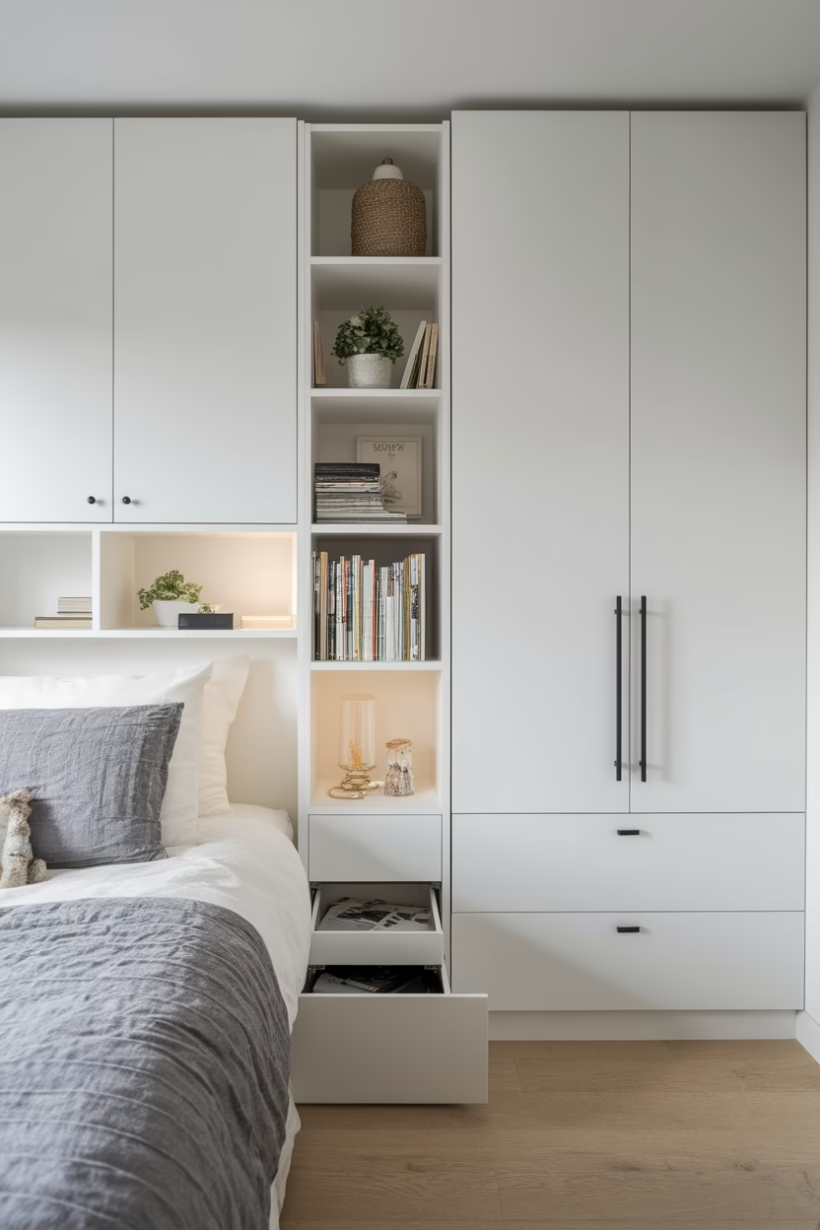
13. Over-Bed Storage Tower: Shelves and Wardrobes Bridged TogetherThis is the hack that maximizes every centimeter of a small bedroom. Flank the bed with two PAX wardrobe units on either side, connect them above the bed with upper cabinet modules, and you’ve created a built-in alcove where the bed sits.
The shelves directly beside the pillow area serve as nightstands. The upper cabinets above the bed handle out-of-season storage, extra bedding, anything you access infrequently. The wardrobes on either side take care of daily clothing.
It sounds like a lot but when it’s painted the same color as the wall, it disappears. The bed becomes a sleeping nook — a private, enclosed-feeling space within a larger room. In bedrooms where privacy or coziness is a goal (not just storage), this is the most satisfying solution of all.
14. HEMNES Daybed: Two Beds and Two Storage Drawers in One FrameThe HEMNES daybed is one of IKEA’s most quietly clever pieces. By day, it’s a sofa. By night, it’s a single bed. Pull out the trundle and it becomes two single beds. Underneath the whole frame, two deep drawers hold linens, spare pillows, or whatever else needs a home.
This is the obvious answer for guest rooms that double as home offices, kids’ rooms where sleepovers happen, or anyone living in a studio who needs the living room to become a bedroom at night. It solves four problems at once: seating, sleeping, guest accommodation, and storage.
Styled with large cushions in linen tones and a knitted throw, it reads as a proper sofa during the day. No one walking into the room needs to know it’s also a bed unless you tell them.
Final Thoughts on These IKEA Storage HacksThe through-line in all of these IKEA storage hacks is the same: using the vertical space you already have, choosing pieces that do more than one job, and committing to the idea that storage doesn’t have to be ugly or invisible to work.
Not every hack on this list will make sense for your room — your ceiling height, your floor plan, and how you actually live in a space all matter. But if even two or three of these ideas spark something, that’s a real starting point.
Pick one. Start there. Bedrooms tend to unlock themselves once the first storage problem gets solved. And IKEA, for all its flat-pack reputation, is genuinely one of the most flexible systems you can build your space around.
Have a favorite IKEA storage hack that didn’t make the list? Drop it in the comments — I’m always looking for real-world solutions that actually hold up over time.


