
14 Stunning Boho Bedroom Decor Ideas That Actually Feel Lived-In
If your bedroom feels like it’s stuck somewhere between “forgettable hotel room” and “I gave up and bought a gray comforter,” you’re not alone. A lot of us live in spaces that are perfectly functional but somehow completely soulless — and every time you scroll through boho bedroom decor on Instagram, it all looks impossibly dreamy and just slightly out of reach. The canopies, the macramé, the jungle of houseplants casually positioned as if they grew there on their own. What is that, anyway?
Here’s the thing: boho style isn’t actually about buying the right products. It’s a feeling — layered, warm, a little unruly, and very much yours. The best boho bedrooms I’ve ever seen were put together over time, with mismatched things that somehow clicked. This post is your permission slip to start wherever you are. Whether you’re working with a tiny apartment bedroom or a spacious master suite, these fourteen ideas will give you real direction — not a shopping list you’ll abandon by Tuesday.
Let’s get into it.
Layer Your Textiles Like You’ve Been Collecting Them for YearsThis is the single biggest difference between a boho bedroom that looks alive and one that looks like a catalog. Layering textiles — mixing patterns, weights, and textures — is what creates that deeply cozy, traveled feeling you’re after. Think a chunky hand-knit throw draped over linen sheets, topped with a couple of flat-woven kilim cushions and one velvet pillow that has no business being there but somehow works perfectly.
Who is this for? Honestly, everyone. But especially if your bedroom currently has one plain duvet and two matching pillowcases. That’s a good foundation; now you just need to mess it up a little.
Why it works comes down to visual weight. When everything matches too perfectly, your eye moves through the space and finds nothing interesting to land on. Layers give you something to look at, something to touch, something that tells a story. The trick is to keep your colors in the same warm family — terracottas, sands, rusts, dusty pinks — so that even mismatched patterns feel cohesive.
Practical Tip
Start with a base of solid linen or cotton in a neutral tone. Then add one patterned blanket, two cushions in different patterns (one small-scale, one larger), and a throw that you actually drape messily — not folded. The imperfection is the point.
In my experience, people are afraid to mix patterns because they think it’ll look chaotic. It won’t, as long as you stay within a warm earth tone palette. I’ve noticed that even clashing patterns can feel harmonious when the colors are related. So trust the warmth — it holds everything together.
A Canopy Bed Isn’t Just for Fairy Tales — It Changes the Whole EnergyTwo takes on the canopy bed — one lush and dramatic (left), one sun-drenched and serene (right).
There’s a reason canopy beds appear in almost every boho bedroom inspiration board you’ve ever saved. They do something architecturally powerful to a room: they create a space within a space. When you drape sheer curtains or gauzy linen panels from a four-poster frame, the bed stops being a piece of furniture and becomes a destination.
For a more romantic, maximalist mood, go with full draping on all four sides — let the fabric pool slightly on the floor and keep the rest of the room unfussy. If you prefer something airier and Scandinavian-boho (yes, that’s a thing), a simple wooden frame with just two side panels and clean white bedding hits differently. Both versions work beautifully; it really comes down to whether you want moody or sunlit.
The practical concern I hear most often is “my ceilings aren’t tall enough.” In my experience, even standard eight-foot ceilings are perfectly fine for a four-poster frame — you don’t need dramatic height if the frame itself is slim and the fabric is light. Heavy velvet drapes on low ceilings? That’s where it gets claustrophobic. Sheer linen or cotton muslin? Always fine.
Practical Tip
If buying a full four-poster isn’t in the budget, two tension rods installed above your headboard can achieve a similar draped effect with a fraction of the cost. Install them at ceiling height, hang sheer panels, and pull them back with fabric ties during the day.
Go All-In on Terracotta — It’s the Color That Earns Its KeepTerracotta has had a moment for a few years now, and unlike a lot of design trends, it hasn’t worn out its welcome. There’s a reason for that: it’s a deeply human color. It’s the color of clay, of earth, of warm afternoon light through a window. It doesn’t fight with anything.
This image is a masterclass in restraint. Burnt orange linen bedding, curtains in the same warm family, a terracotta pot with a palm frond spilling out of it — and then everything else is cream and wood. No clutter. No competition. Just warmth.
This approach is particularly effective if you’re working with a bedroom that gets a lot of natural light. Morning sun hitting terracotta linen looks like something from a boutique hotel in Marrakech. If your room is darker or faces north, warmer artificial lighting (bulbs in the 2700K range) will achieve a similar effect after sundown.
Linen duvet in terracotta or burnt sienna Matching curtains — don’t be afraid to go floor-length and pooling One or two tactile cushions in related warm tones (mustard, rust, sand) A single terracotta planter, ideally with something architectural like a palmI’ve noticed that people often add too many accent colors when working with terracotta, as if they’re afraid the room will look monochromatic. Resist that urge. The beauty of a terracotta palette is in its depth, not its variety.
Macramé Wall Hangings: How to Use Them Without Going OverboardClustered macramé for maximum texture (left) vs. one oversized statement piece that commands the room (right).
Macramé wall hangings are probably the most recognizable element of boho bedroom decor, and also the easiest one to get wrong. Used well, they add handcrafted texture and warmth that no wallpaper can replicate. Used carelessly — three small ones from a big-box store scattered randomly across different walls — they can make a room look like it’s trying too hard.
The two approaches that work best are polar opposites. The first: one large, statement-quality macramé piece hung directly above the headboard, serving as the room’s focal point. This works especially well in minimalist or Scandi-boho spaces where the walls are clean and white. The piece does all the talking.
The second approach is clustering — grouping two or three macramé hangings together alongside rattan wall plates and small framed botanicals. Done intentionally, it reads like a curated gallery wall rather than a random collection. Mixing textures within the cluster (knotted rope alongside a woven grass plate, for example) is what elevates it.
“One great macramé piece above your bed will do more for a room than six mediocre ones scattered around it.”
If you’re working with a small space, the single large piece is almost always the right call. It draws the eye up and makes the room feel taller without adding any physical bulk.
The Moroccan-Inspired Boho Bedroom: When You Want Drama Without the CommitmentNot every boho bedroom has to be light and airy. This is something the interior design world doesn’t say enough. If your taste runs warmer and moodier — think jewel tones, carved wood, layered rugs, and lantern-style lighting — the Moroccan-boho direction is worth exploring seriously.
This aesthetic works best in rooms that already have some character: older homes with plaster walls, rooms with lower ceilings, spaces that don’t get a ton of natural light. Where bright Scandinavian boho might fight against a dark or intimate room, Moroccan-inspired decor leans into it.
Key elements to look for: an ornate or arch-shaped mirror, deep red or burgundy textiles with block-print or paisley patterns, a tasseled pendant lamp (the gold perforated ones that cast geometric shadows are particularly stunning), and at least one layered Persian or kilim rug. The carved wooden screen in this image — positioned behind the bed as both headboard alternative and room divider — is a clever piece that anchors the whole aesthetic.
Practical Tip
You don’t need to renovate to achieve this look. A deep red or jewel-toned tapestry hung behind the bed, a Moroccan-style lantern on the nightstand, and a vintage kilim rug on the floor will get you 80% of the way there in an afternoon.
In my experience, people shy away from this look because they’re afraid it’ll feel heavy or cluttered. The secret is keeping the walls themselves relatively bare — let the textiles do the work, and resist the urge to fill every surface.
Hang Your Plants — Seriously, Get Them Off the FloorFloor plants are great. But hanging plants? They completely transform the vertical dimension of a bedroom in a way that floor plants simply can’t. When you suspend trailing plants from the ceiling — pothos, string of pearls, devil’s ivy — the room starts to feel like a greenhouse crossed with a treehouse, and that’s exactly the energy boho bedrooms are chasing.
This image is proof. Three macramé plant hangers at varying heights, all holding trailing pothos, create a living ceiling feature above the bed. Combine that with fairy lights woven through the vines, and the effect at night is genuinely magical. It sounds fussy, but it’s actually quite low maintenance once installed — pothos are notoriously forgiving, and high up near a window they tend to thrive.
For renters or anyone nervous about ceiling hooks: tension rods between walls, a tall wooden dowel suspended from two hooks at different heights, or even a clothing rack repurposed as a plant hanger are all workable alternatives.
Pothos and trailing philodendron are the most forgiving options Vary the heights — some just below the ceiling, others at mid-height Macramé hangers add texture; simple knot hangers feel more modern Add a strand of warm fairy lights through the vines for evening atmosphereI’ve noticed that once people hang their first plant, they immediately wish they’d done it sooner. There’s something about greenery at eye level and above that makes a room feel genuinely alive.
The Sand-and-Cream Palette: Boho for People Who Don’t Like ColorTwo variations on the neutral boho palette — one quiet and plant-forward (left), one rich in texture and light-play (right).
Not everyone gravitates toward the terracotta-and-jewel-tone version of boho. If your instinct is to keep things light, quiet, and deeply calm, the sand-and-cream palette is genuinely one of the most beautiful directions you can take a bedroom. It’s not “safe” — done well, it’s layered and rich and surprisingly sophisticated.
The key to making a neutral boho bedroom feel interesting rather than beige and boring is texture. Every single surface needs to bring something tactile: the rug should be jute or a chunky weave, the throw should have visible knots or fringe, the cushions should have tufting or embroidery. When color isn’t doing the work, texture picks up the slack entirely.
The oversized rattan pendant light in the right image above is worth noting specifically. It does three things simultaneously: adds warmth through its woven shadow pattern when lit, introduces an organic natural material at ceiling height, and pulls the whole room together without competing with anything below it. If your boho bedroom is missing something and you can’t quite identify what, nine times out of ten it’s a statement light fixture.
Practical Tip
In a neutral palette, vary your whites. Cool bright white and warm cream in the same room look accidental. Commit to warm whites and creams throughout, and your neutrals will feel rich rather than muddy.
Wicker Wall Baskets: The Most Underrated Boho Decor TrickWicker or seagrass wall baskets are the unsung heroes of boho bedroom decor, and I genuinely don’t understand why more people don’t reach for them first. They’re affordable, lightweight, easy to hang, and they bring both texture and dimension to a wall in a way that flat art simply cannot. The variation in sizes — from small dessert-plate-sized discs to large serving tray-scale rounds — means you can build a real gallery wall effect without ever touching a picture frame.
The image above uses them brilliantly: a cluster of eight or so baskets in varying sizes, interspersed with a macramé hanging and a few small framed prints. The effect reads as eclectic and global — like these pieces were gathered on travels — which is precisely the boho spirit at its most authentic.
If you’re working with a large wall and want to try this, start with your largest basket at the center-left of your arrangement and build outward asymmetrically. Symmetrical arrangements read as formal; asymmetry reads as collected. Combine natural wicker with a couple of painted or lacquered options for depth, and mix in your macramé piece to vary the texture profile.
The rattan bench at the foot of the bed here is also worth calling out — it’s functional, beautiful, and gives you a landing spot that most bedrooms desperately need.
Colorful Kilim Pillows: Your Shortcut to an Instantly Interesting BedIf you’ve been sticking to neutral pillows because you’re afraid of committing to color, this image is your intervention. Kilim-style cushions — those flat-woven, geometric-striped ones in warm multicolors — are the single fastest way to inject personality into a bed that’s currently doing nothing for the room. They work with almost any base, from plain white linen to warm sand cotton.
The reason they photograph so well on Pinterest (and why they look even better in person) is that they bring historical and global character. Kilim weaving has roots across Turkey, Central Asia, and North Africa — these aren’t just pretty patterns, they carry genuine craft traditions. That authenticity is something you feel even if you can’t articulate it.
Mix two or three sizes: one long bolster pillow, one or two standard squares, and a smaller accent. Keep them in the same warm color family — reds, oranges, mustards, greens — and let them clash slightly. That’s the goal. The slight clash is what makes it feel like a real space rather than a stage set.
Practical Tip
If you only buy one thing from this entire post, make it a pair of kilim cushions. They’re available for under $30 each from a dozen different sources, they’ll survive multiple bedroom redesigns, and they make a plain white bed look intentional within seconds.
Use Plants as Architecture — Not Just DecorationLarge statement tropicals that structure the room (left) vs. a curated collection of small desert plants for a slower, quieter energy (right).
There’s a difference between having plants in your bedroom and using plants to actually shape the space. Once you start thinking about your plants as architectural elements — as vertical features that define corners, flank focal points, and direct movement through the room — everything changes.
Large-leaf tropicals like monstera, bird of paradise, and fiddle-leaf fig are the most effective for this purpose. Place two flanking a canopy bed or headboard wall and they immediately create a sense of enclosure and drama. They’re doing what columns do in classical architecture: framing something important. For a more desert-boho or Californian vibe, a collection of sculptural cacti and succulents on a windowsill achieves something different — quieter, more precise, almost zen.
The key question to ask yourself is: what do I want my plants to frame? The bed is the obvious answer in a bedroom, but a reading nook, a window, or even a doorway can all be architectural moments worth defining with greenery.
If you’re working with a small space and worried about scale, one large plant in a tall basket planter in the corner nearest the window will have more visual impact than six small plants scattered around. Fewer, bigger, better positioned.
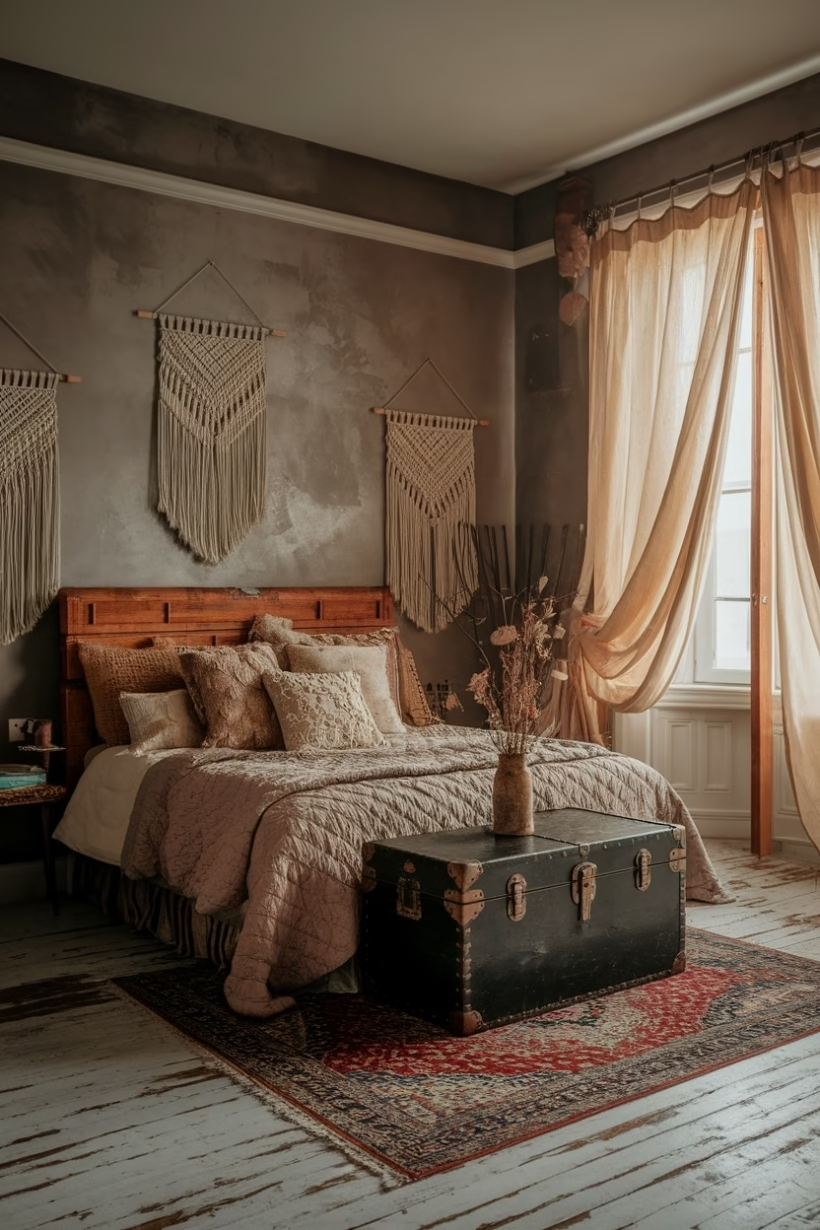
The Vintage Trunk: Functional, Storied, and Completely UnderusedA vintage steamer trunk at the foot of the bed is one of those design moves that looks like it cost a lot and often costs almost nothing. Thrift stores, estate sales, and online marketplaces are full of old trunks in various states of patina, and that lived-in character is exactly what you want in a boho bedroom. A pristine reproduction trunk would lose the whole point.
What makes this piece work so well in the room above — beyond the obvious drama it provides — is the practical story it tells. It implies travel. It implies a life beyond this room. Boho style at its core is about eclecticism and experience, and a weathered trunk communicates both of those things without a single word.
Beyond the aesthetic, it’s genuinely useful: extra blankets, seasonal clothing, anything you want accessible but not on display. The dried botanicals in the vase placed on top add an organic, slightly melancholy note that suits the moody wall color beautifully.
This room also shows something important about dark walls in boho spaces: when the rest of the room is warm — peachy sheers, warm wood bed frame, rose-toned bedding — a dark wall becomes atmospheric rather than oppressive. It’s all about the light temperature you introduce alongside it.
The Low Platform Bed: A Quiet Nod to Japanese-Boho MinimalismLow beds — floor beds or platform beds with minimal clearance — have a grounding effect that higher beds simply don’t. There’s something genuinely calming about sleeping close to the floor, and aesthetically, a low bed allows the rest of the room to breathe more freely. Everything above it becomes part of the composition.
In this particular room, the low wooden platform bed creates a clear horizontal anchor, which lets the vertical elements — the tall window, the plant shelf, the macramé wall hangings — do their thing without competition. The jute rug extends the natural material palette without adding visual clutter.
The plant shelf under the window is a smart detail worth borrowing directly: a long, low shelf specifically built to hold a collection of small succulents and cacti in terracotta pots. It turns an awkward window ledge into a genuine feature and keeps the plant collection organized rather than scattered. If you have a south- or east-facing window, this is arguably the best use of that sill space in any boho bedroom.
Practical Tip
If a full platform bed isn’t feasible, removing the box spring and placing your mattress directly on a low wooden frame or even a tatami mat platform will achieve a similar visual effect at a fraction of the cost.
Canopy Meets Macramé: The Double Feature That Stops People in Their TracksWhat happens when you pair a canopy bed with macramé detailing? Something genuinely special. Instead of standard sheer panels, this bedroom uses a full macramé curtain on the canopy post — and the effect is both airy and incredibly rich in texture. The knotted rope panel acts as a room divider, a backdrop, and a work of art simultaneously.
The warm layering in this room also deserves attention: orange and rust kilim cushions, a cream knit throw with long fringe, a red Persian rug, a reclaimed wood dresser with a row of succulents and cacti in terracotta pots lining the window. It’s a lot — and it works because every element shares a warm, earthy color story. There’s no cold tones, no chrome, no stark white. Everything is in conversation.
If this inspires you to do something similar, start with the rug. A red or rust Persian rug has more transformative power per square foot than almost any other single purchase in a bedroom. It grounds the whole space, and everything you layer on top of it will read warmer and more intentional.
I’ve noticed that people tend to undersize their bedroom rugs significantly. The rug should extend well beyond the sides of the bed — ideally 24 to 36 inches on each side — so that your feet land on it when you get up in the morning. An undersized rug is one of those details that’s hard to articulate but easy to feel.Idea 14
The Warm-Neutral Boho Bedroom: Everything You Need, Nothing You Don’tSometimes the best boho bedroom is the simplest one. Not the most decorated, not the most dramatic — just the most considered. This room nails it: caramel linen bedding in two tones, a cluster of macramé wall hangings in cream, a jute rug, and a single tall bamboo plant. That’s essentially the whole list.
What makes it feel complete rather than sparse is the quality of each choice. The bedding has visible texture and weight. The macramé pieces are beautiful individually, not just decorative filler. The bamboo is tall enough to fill its corner properly. The woven tray on the bed with a couple of handmade vessels — that’s the kind of small detail that elevates a room from decorated to styled.
This is the approach I’d recommend if you’re just starting out with boho bedroom decor and feel overwhelmed by the visual richness of some of the other ideas in this post. Begin with quality neutrals. Add texture before color. Choose one focal point — the macramé wall, the plant, the rug — and let it lead. Everything else will fall into place around it more naturally than you’d expect.
Start with linen bedding in a warm neutral — it photographs beautifully and ages well One quality macramé piece beats three average ones every time A jute or sisal rug is the most hardworking element in any boho bedroom One tall plant, correctly placed, is worth more than a dozen small ones scattered around Styling a tray on your bed or nightstand — books, a candle, a vessel — signals intentionalityIn my experience, the boho bedrooms that feel most genuinely beautiful aren’t the most expensive or the most decorated. They’re the ones where someone made thoughtful choices and then stopped. Restraint is a skill, and in boho design especially, knowing when you’re done is everything.
Final ThoughtsBoho bedroom decor is fundamentally about warmth, texture, and a sense of personal history. It’s the style that rewards slow collecting over fast decorating — the kind of room that gets better every time you add one right thing rather than ten mediocre things.
If there’s one piece of advice I’d leave you with, it’s this: don’t try to recreate any single image you find online, including the ones in this post. Steal individual ideas — the hanging plants, the macramé cluster, the layered textiles — and combine them in ways that reflect your own taste. That combination is what will make your bedroom feel genuinely yours rather than a slightly off-brand copy of someone else’s.
Start with one thing. The rug, or the macramé, or the plants. Get that right first. Then keep going at your own pace. The best boho bedrooms I’ve ever seen were built slowly, with intention, and they showed it in every corner.
Now go — your bedroom is waiting to become something much better.


